Features
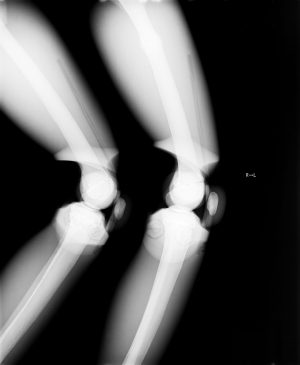
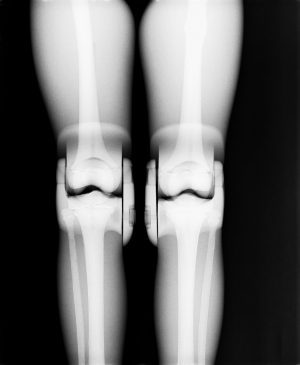
- Training in pediatric radiography can be enriched with clear and subtle bone fractures
- Typical fractures resulting from child abuse are also included
- Radiology absorption and HU number approximate to human body
- Main joints have close-to human articulation
- Phantom can be separated into 10 individual parts
Applications
- Plain X-ray
- CT
- Basic patient positioning
- Radiographic interpretation
Concept and Anatomy
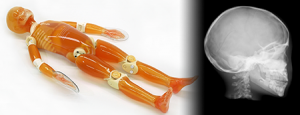
Children around the world are victims to domestic violence and abuse, yet the problem is often overlooked. Noticing the signs of an abusive fracture of a child is the first step to putting an end to these maltreatment’s. This phantom has been designed and developed to cultivate such observation skills in future radiologists and radiographers.
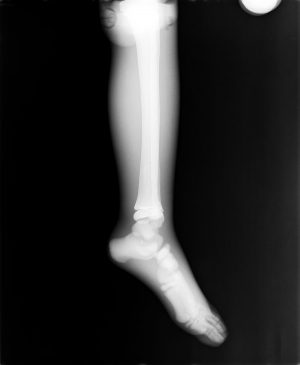
- Signs of callus: A number of callus examples can be a result of abusive treatment. This particular model contains calluses in the wound healing phase 5.
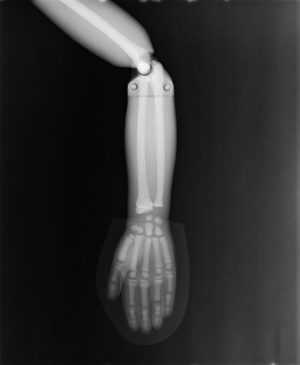
- Supracondylar humerus fracture: A supracondylar humerus fracture on the distal humerus above epicondyles and is a fracture commonly obseserved in children, accounting for approximately 20%.
- Spiral fracture: Certain causes of non-accidental pediatric injuries, such as spiral fractures, include maltreatment stimulated by anger or distress.
- Back, scapula and rib fractures: Rib fractures close to the vertebrae may be potential indicators of the child being thrown.
- Skull fractures: A linear skull fracture may be another indication of child maltreatment. At times, fractures display better on X-rray scans than CT imaging.
Set Includes:
- 1 pediatric whole body phantom
- 1 head supporter
- 1 hand fixture belt
- 1 screwdriver
- 1 set of sample X-ray data (DVD)
- manual